


- Your cart is empty Browse Shop
Upgrade Your Home: Air Conditioning, Heat Pumps & Solar Without Gas

October 23,2026
0
229
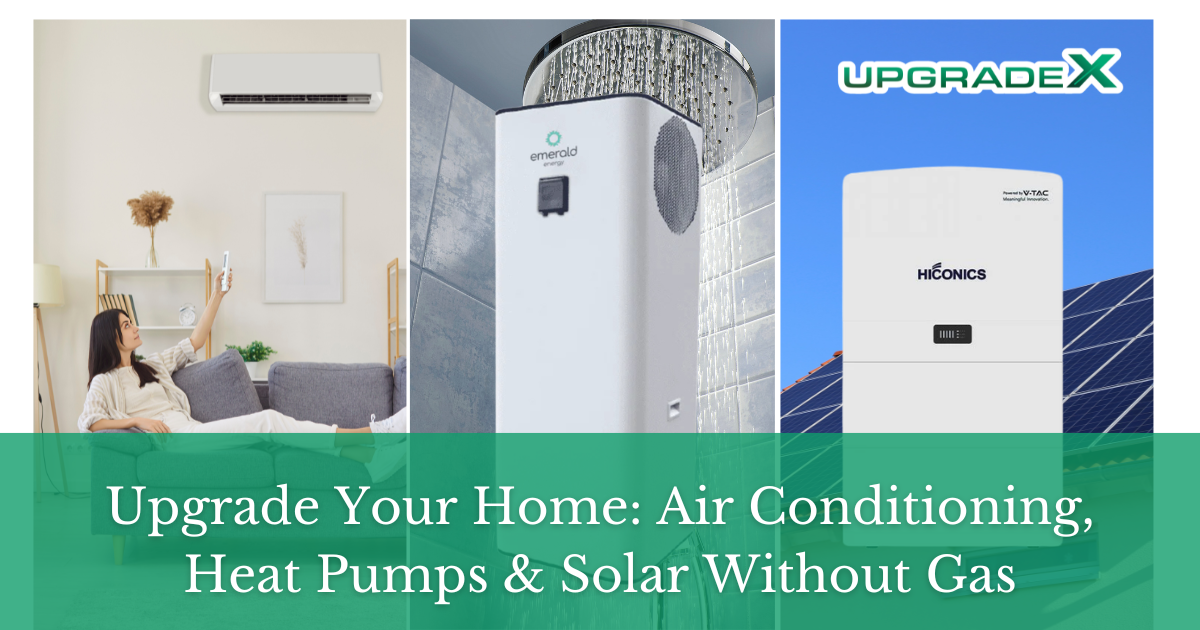
If your Melbourne home still runs on gas — for heating, hot water, or both — 2026 is the year to make the switch.
Gas prices are rising. The Victorian Government is actively phasing out gas appliances. And the combination of air conditioning, heat pumps, and solar panels now delivers something gas never could: whole-home comfort, hot water, and electricity — all from clean energy, all at a fraction of the running cost.
Better still, a typical Melbourne home completing a full electrification project can access well over $15,000 in combined Victorian and federal rebates, discounts, and certificates — making 2026 the most financially compelling year in history to go gas-free.
At UpgradeX, we’re a Melbourne-based installer helping Victorian homeowners complete exactly this kind of whole-home upgrade. In this guide we’ll explain exactly what’s involved, how much you can save, and the smartest order to do it all in.
Why 2026 Is the Year to Ditch Gas
Victoria’s gas phase-out is no longer a distant policy — it’s happening right now, with clear deadlines already in place.
From 1 March 2027, existing homes must upgrade gas hot water systems with an efficient electric alternative, like a heat pump, as they reach end-of-life.
Victoria’s gas phase-out plan continues to gain momentum in 2026, with the government offering enhanced rebates to help homeowners transition early.
This means if you wait until your gas system breaks down after March 2027, you’ll be forced into an emergency electric replacement — at short notice, without time to research, and potentially without access to the best available rebates.
Upgrading now in 2026 means:
- ✅ You choose the timing — not a crisis
- ✅ You access the full range of current rebates
- ✅ You start saving on energy bills immediately
- ✅ You future-proof your home against rising gas costs
The 3 Upgrades That Work Together
A gas-free Melbourne home in 2026 relies on three interconnected upgrades. Here’s how they fit together:
1. Reverse Cycle Air Conditioning — Replaces Gas Heating
A modern reverse cycle air conditioner — whether ducted or split system — both heats and cools your home using electricity. It completely eliminates the need for gas space heating.
A gas ducted heater operating at its best converts around 85 to 92 cents of every dollar of gas into usable warmth. A modern reverse cycle air conditioner with a Coefficient of Performance (COP) of 3.5 delivers $3.50 worth of heat for every $1 of electricity.
This efficiency gap is enormous — and it translates directly into hundreds of dollars in annual savings on your energy bills.
2. Heat Pump Hot Water — Replaces Gas Hot Water
A heat pump hot water system draws heat from the surrounding air to heat your water, using a fraction of the electricity that a resistive element would use. It replaces your gas hot water system entirely.
A heat pump hot water system is up to three times more efficient than traditional electric or gas systems. They work like an upside-down refrigerator, drawing heat from the surrounding air to warm the water.
3. Solar Panels — Powers Everything for Free
Rooftop solar panels generate clean electricity during the day that powers your reverse cycle air conditioner and charges your heat pump. When sized correctly for your home, solar can reduce your electricity bills to near-zero.
All-electric homes, powered by solar, can save you thousands on energy bills every year.
The combination of all three — reverse cycle aircon + heat pump hot water + solar panels — creates a home that heats, cools, and generates hot water almost entirely from free solar energy during the day.
What Order Should You Upgrade?
This is the question most Melbourne homeowners get wrong. Many start with solar panels — but if you’re still running gas heating and gas hot water, adding solar first is inefficient because those gas appliances can’t use the solar electricity you’re generating.
The smartest approach: fix space heating first. Space heating accounts for 40 to 60 percent of a typical Melbourne household’s total energy bill. It is the single largest energy cost in most homes and the category where gas is most disadvantaged against modern electric alternatives.
The Recommended Order for Maximum Savings
Step 1 — Replace Gas Heating with Reverse Cycle Aircon This delivers the biggest immediate bill reduction and the highest VEU rebate available. Do this first.
Step 2 — Replace Gas Hot Water with Heat Pump Once your heating is electric, tackle hot water next. This is also where you can stack the most rebates — VEU + Solar Victoria + STCs combined.
Step 3 — Install Solar Panels Now that your biggest energy consumers (heating and hot water) are electric, solar panels will power them during the day — dramatically reducing your electricity import from the grid.
Step 4 — Add Solar Battery Store excess solar energy for use at night or during peak periods, achieving near-complete energy independence.
How Much Can You Save? Full Rebate Breakdown
The VEU program now also rewards full-house electrification, meaning combined upgrades — solar, air conditioning, and hot water — unlock stacked rebates for eligible homes.
Here’s what’s available in 2026:
Air Conditioning Rebates (VEU Program)
| Upgrade | VEU Rebate |
|---|---|
| Gas ducted heater → Ducted reverse cycle | Up to $8,000 |
| Gas heater → Multi-split system | Up to $7,200 |
| Gas wall heater → Split system | $800–$2,500 per unit |
| Old split system → New reverse cycle | $200–$500 |
No income test — every Victorian homeowner qualifies.
Heat Pump Hot Water Rebates (Stacked)
For heat pump hot water, the VEU discount is applicable with no income test, the Solar Victoria rebate provides up to $1,400 for eligible locally manufactured systems, and Federal STCs are worth approximately $2,500 to $3,000.
| Rebate | Amount |
|---|---|
| VEU Program Discount | $500–$1,000+ |
| Solar Victoria Hot Water Rebate | Up to $1,400 |
| Federal STCs | $2,500–$3,000 |
| Total potential saving | Up to $5,400+ |
Solar Panel Rebates
| Rebate | Amount |
|---|---|
| Solar Victoria Rebate | Up to $1,400 |
| Federal STCs (10kW system) | $2,500–$3,200 |
| Total solar saving | Up to $4,600 |
Solar Battery Rebates (New for 2026)
The Federal Cheaper Home Batteries Program provides approximately 30 percent discount, up to approximately $5,000 on a 13.5 kWh system, with no income test.
Total Potential Savings — Full Home Electrification
| Upgrade | Rebate Available |
|---|---|
| Ducted aircon (replacing gas) | Up to $8,000 |
| Heat pump hot water (stacked rebates) | Up to $5,400 |
| Solar panels | Up to $4,600 |
| Solar battery | Up to $5,000 |
| Total potential rebates | $15,000–$23,000 |
Real Savings Example — Melbourne Family of 4
Before upgrade (gas heating + gas hot water + grid electricity):
- Gas heating: ~$1,200/year
- Gas hot water: ~$900/year
- Electricity (lighting, appliances): ~$1,800/year
- Gas standing charge: ~$380/year
- Total energy cost: ~$4,280/year
After upgrade with UpgradeX (reverse cycle ducted + heat pump + 6.6kW solar):
- Reverse cycle aircon running costs: ~$320/year
- Heat pump running costs: ~$120/year
- Electricity (offset by solar): ~$400/year
- No gas standing charge: $0
- Total energy cost: ~$840/year
Annual saving: ~$3,440/year 10-year saving: ~$34,400 Total rebates received: ~$15,000+
Does This Work in Melbourne’s Cold Winters?
One of the most common concerns from Melbourne homeowners is whether electric systems can handle Victoria’s winters — particularly in inland areas that experience genuine cold snaps.
The answer is yes — for both systems:
Reverse cycle air conditioning: Modern inverter systems are rated to heat efficiently in temperatures down to -15°C. Melbourne’s coldest recorded temperature is -2.8°C — well within the comfortable operating range of every system UpgradeX installs.
Reverse cycle systems can operate at 300–500% efficiency, meaning they generate multiple units of heating or cooling from one unit of electricity.
Heat pump hot water: Modern heat pump systems are designed to operate effectively in Melbourne’s cooler months. Unlike solar thermal systems, they do not depend on direct sunlight and maintain performance reliability throughout Victoria’s variable climate.
The March 2027 Deadline — Why Acting Now Matters
If you have a gas hot water system, the March 2027 deadline is critical to understand.
From March 2027, gas hot water systems that fail cannot be repaired and must be replaced with efficient electric alternatives. Although these regulations begin in 2027, the rebate landscape in 2026 sets the stage for Victorian households to act earlier and benefit financially before new requirements take full effect.
Homeowners who act in 2026 benefit from:
- Choosing the right system — not an emergency replacement
- Full rebate access — current programs may change
- Immediate savings — every month of delay costs money
- No gas price exposure — lock in electric running costs now
Why Choose UpgradeX for Your Home Electrification
UpgradeX is a Melbourne-based, VEU-accredited installer and Solar Victoria authorised retailer. We specialise in complete home electrification — not just one product, but the whole package.
What we handle for you:
- ✅ Free in-home assessment and eligibility check
- ✅ All VEU, Solar Victoria, and STC rebate paperwork
- ✅ Rebates applied directly to your invoice — no waiting
- ✅ Licensed A-grade electricians and HVAC technicians
- ✅ Licensed plumbers for heat pump hot water
- ✅ Minimum 5-year warranty on all installed systems
- ✅ Complete decommissioning of old gas systems
- ✅ Serving all of Melbourne and regional Victoria
We can assess your home, recommend the right combination of upgrades for your budget, and sequence the installations to maximise your rebates and minimise disruption.
Frequently Asked Questions
Do I need to do all three upgrades at once? No — you can spread them out over 1–2 years. We recommend starting with the air conditioning upgrade (biggest rebate + biggest savings), then hot water, then solar. UpgradeX can plan a sequenced upgrade schedule tailored to your budget.
Can I keep gas for my cooktop? Yes. The electrification of heating and hot water is completely independent of your kitchen appliances. Many UpgradeX customers eliminate gas hot water and heating while keeping a gas cooktop, then switch to induction cooking in their own time.
What if my gas system is still working fine? This is actually the best time to upgrade — you have time to research, choose the right system, and access full rebates. Waiting until a system fails means emergency decisions, rushed installation, and potentially fewer rebate options.
Is there an income test for these rebates? The VEU program has no income test at all. The Solar Victoria rebate requires a household income under $210,000 — which the vast majority of Victorian households comfortably meet.
How long do the installations take? A split system typically takes half a day. Ducted systems take 1–2 days. Heat pump hot water takes 1 day. Solar panels take 1 day. UpgradeX coordinates all trades and can sequence installations to minimise time off work for you.
Get Your Free Home Electrification Quote
UpgradeX will assess your home, calculate your total rebate entitlement, and provide a clear sequenced plan for going gas-free — with all rebates applied upfront.
👉 Get a Free Quote from UpgradeX — Response within 24 hours.
📞 +61 476 231 777
📧 info@upgradex.com.au
📍 Serving Melbourne and all of Victoria
Last updated: March 2026. Rebate amounts are subject to change. Contact UpgradeX for current estimates specific to your property and existing systems.