


- Your cart is empty Browse Shop
How Melbourne’s Weather Affects Solar Battery Performance and Lifespan

August 18,2026
0
6
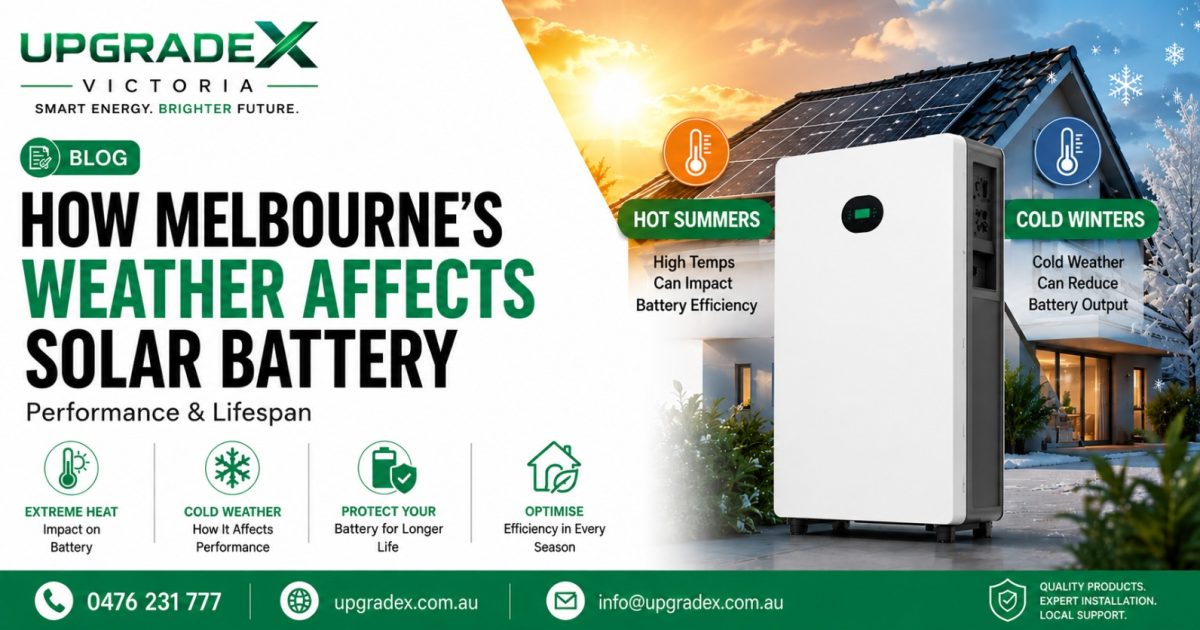
Australia’s weather can change dramatically throughout the year. Melbourne, in particular, experiences hot summer days, cold winter mornings and sudden temperature changes that can affect household energy systems. If you have invested in a solar battery, understanding how weather influences its performance can help you get better value from your system and protect your battery over the long term.
A solar battery stores excess energy generated by your solar panels so it can be used when your panels are producing little or no electricity. Modern home batteries are designed to operate across a range of temperatures, but they still have recommended operating conditions.
Both extreme heat and extreme cold can influence battery efficiency. However, the way they affect a battery is different.
For Victorian homeowners considering solar battery installation in Melbourne and surrounding areas, choosing the right battery and installing it in a suitable location are important parts of achieving reliable year-round performance.
How Temperature Affects Solar Battery Performance
Most modern home energy storage systems use lithium-based battery technology, including lithium iron phosphate (LFP) chemistry. These batteries are designed with sophisticated Battery Management Systems (BMS) that monitor factors such as temperature, voltage and charging conditions.
Temperature can influence the electrochemical processes inside a battery.
When conditions become too cold, battery performance and charging capability can decrease. When temperatures become too hot for extended periods, the battery can experience increased thermal stress and accelerated degradation.
This is why manufacturers specify temperature limits for individual battery models.
| Temperature Condition | Possible Effect on Battery |
|---|---|
| Moderate temperatures | Generally efficient operation |
| Cold conditions | Reduced charging and discharge performance |
| Very cold conditions | Charging may be restricted by the BMS |
| High temperatures | Increased thermal stress and potential degradation |
| Extreme heat | Battery may reduce output or shut down for protection |
Important: Temperature limits differ between battery brands and models. Always follow the manufacturer’s installation and operating specifications.
Can Melbourne’s Cold Winter Weather Affect a Solar Battery?
Yes. Cold weather can influence the way a lithium battery charges and discharges.
During very cold conditions, the chemical reactions inside the battery slow down. As a result, the battery may temporarily have reduced charging or discharge performance.
One of the most important concerns is charging a lithium battery at temperatures below its permitted charging range.
If a lithium battery is charged when it is too cold, lithium plating can potentially occur inside the cells. This can contribute to permanent battery degradation. Fortunately, modern batteries use a BMS to monitor cell temperatures and can restrict or stop charging when conditions fall outside the permitted range.
What happens on a cold Melbourne morning?
Imagine a winter morning when the temperature has dropped significantly overnight. Your solar panels begin generating electricity as the sun rises, but the battery may still be cold.
Depending on the battery model and its temperature limits, the system may:
- Reduce charging power
- Temporarily stop charging
- Resume normal charging once the battery reaches a suitable temperature
- Continue operating normally if the battery remains within its specified range
This behaviour does not necessarily indicate a fault. It can be a normal protective function of the battery management system.
Does Cold Weather Reduce Battery Capacity?
Cold temperatures can temporarily reduce the amount of energy a battery can deliver.
This does not necessarily mean the battery has permanently lost capacity. Once the battery returns to a suitable operating temperature, performance can generally improve.
For homes in Melbourne and regional Victoria, this makes appropriate installation and selecting a battery suitable for local conditions particularly important.
Areas such as Ballarat, Bendigo, Moe and other regional Victorian locations can experience colder winter conditions than many parts of metropolitan Melbourne.
Can Melbourne’s Hot Summers Damage a Solar Battery?
Heat deserves particular attention because prolonged exposure to high temperatures can increase battery degradation.
Solar batteries generate some heat while charging and discharging. If a battery is installed in an already hot environment with poor airflow or exposed to direct sunlight, the internal temperature can rise further.
Excessive heat can cause the BMS to reduce charging or discharge power, or temporarily shut the system down to protect the battery.
Repeated exposure to high temperatures can also contribute to faster long-term degradation.
Why direct sunlight can be a problem
A battery installed on an exposed external wall can become significantly hotter than the surrounding air temperature, particularly when the wall receives strong afternoon sunlight.
For this reason, battery placement should be considered carefully during installation.
Where permitted by the manufacturer’s specifications, a suitable location may provide:
- Protection from direct sunlight
- Adequate ventilation
- Appropriate clearance around the battery
- Protection from excessive environmental exposure
- Sufficient access for servicing and inspection
Your installer should always follow the specific installation requirements supplied by the battery manufacturer.
The Importance of Correct Solar Battery Placement
One of the most important decisions made during a battery installation is where the battery will be positioned.
A suitable location can help minimise exposure to temperature extremes and provide the airflow and clearances required by the manufacturer.
Avoid unnecessary heat exposure
Where possible and permitted by the installation requirements, avoid locations that receive intense direct afternoon sunlight.
A shaded area can help reduce unnecessary heat exposure, but shading alone does not replace the manufacturer’s ventilation and clearance requirements.
Maintain proper airflow
Batteries should not be placed inside sealed cupboards or enclosed spaces unless the manufacturer specifically approves that installation arrangement.
Blocking ventilation can allow heat to accumulate around the equipment.
Consider the entire installation
The battery should also be positioned appropriately in relation to other electrical equipment and household appliances that may generate heat.
A professional installer can assess the property and identify a location that meets the relevant product and installation requirements.
What About Installing a Solar Battery in a Garage?
A garage can be a suitable location for some battery systems, but it is not automatically suitable for every home or every battery.
A garage may protect the battery from direct sunlight and harsh weather, but garages can become extremely hot during summer, especially when poorly ventilated or located underneath an uninsulated roof.
Before installation, the location should be assessed against the manufacturer’s requirements for:
- Ambient temperature
- Ventilation
- Clearance
- Moisture exposure
- Access
- Installation environment
- Fire and electrical safety requirements
The correct answer depends on the specific battery model and property.
How UpgradeX Helps Victorian Homeowners Choose the Right Battery
At UpgradeX, we understand that a solar battery isn’t simply about choosing a particular capacity or comparing prices.
The battery needs to suit the household’s energy requirements, solar system, installation location and local environmental conditions.
Our team can help Victorian homeowners assess their energy setup and understand the factors that can influence battery performance throughout the year.
We provide solar and battery solutions for customers across Melbourne and surrounding Victorian areas, including locations such as:
- Melbourne
- Geelong
- Ballarat
- Bendigo
- Melton
- Truganina
- Werribee
- Moe
- Somerville
- Officer
- Colac
Whether you are installing a battery for the first time or considering an upgrade to an existing solar system, choosing the right system and installation location can make a significant difference to long-term performance.
7 Ways to Protect Your Solar Battery Throughout the Year
1. Choose the right installation location
The battery should be installed in a location that meets the manufacturer’s requirements and minimises unnecessary exposure to extreme environmental conditions.
2. Keep the battery away from direct heat sources
Avoid placing the system next to equipment that generates significant heat unless the installation is specifically designed for that environment.
3. Don’t modify the battery enclosure
Do not add DIY insulation, covers or makeshift enclosures around a battery.
A modification that appears to protect the battery from cold weather could restrict airflow and cause heat to build up.
4. Keep ventilation areas clear
Do not obstruct vents or required clearances around the battery.
5. Monitor your system
Many modern solar batteries provide monitoring through a mobile application. Monitoring energy production, battery state of charge and system alerts can help homeowners identify unusual behaviour.
6. Follow the manufacturer’s maintenance requirements
Every battery has its own operating limits and maintenance recommendations. Keep the manufacturer’s documentation available and follow the specified requirements.
7. Arrange a professional inspection if something changes
If your battery begins showing repeated warning messages, unexpected shutdowns or unusual performance, contact a qualified professional rather than attempting to repair the system yourself.
Heat vs Cold: Which Is Worse for a Solar Battery?
Both extremes can affect battery operation, but their effects are different.
| Factor | Cold Weather | Hot Weather |
| Short-term performance | Can decrease | Can decrease |
| Charging limitations | Possible at very low temperatures | Possible at high temperatures |
| BMS intervention | May restrict charging | May reduce output or shut down |
| Long-term concern | Cold charging outside limits | Accelerated degradation from sustained heat |
| Main protection | Suitable installation and BMS | Shade, ventilation and correct placement |
| Key consideration | Minimum charging temperature | Maximum operating temperature |
The most important point is that there is no single temperature specification that applies to every solar battery. Always check the technical specifications for the exact model being installed.
Frequently Asked Questions
1. Can extreme heat damage a solar battery?
Yes. Prolonged exposure to temperatures above the manufacturer’s recommended operating range can increase thermal stress and accelerate degradation. The battery’s BMS may also reduce performance or temporarily shut down the system to protect the cells.
2. Can cold weather affect solar battery performance?
Yes. Cold temperatures can temporarily reduce charging and discharge performance. At very low temperatures, the BMS may restrict charging to protect the battery cells.
3. What is the best temperature for a solar battery?
The ideal temperature depends on the specific battery model. Most manufacturers provide an optimal operating range and separate minimum and maximum charging and operating temperatures. Always use the manufacturer’s specifications rather than relying on a general temperature figure.
4. Is a garage a good place for a solar battery?
A garage can be suitable for some systems, provided the location meets the manufacturer’s requirements. The garage must not expose the battery to excessive heat, poor ventilation, moisture or inadequate clearances.
5. Should I cover my solar battery during winter?
Generally, you should not add a DIY cover or insulation around a battery. These modifications can interfere with ventilation and may create additional heat-management issues. The system should be installed according to the manufacturer’s requirements.
6. Does the battery management system protect against extreme temperatures?
Modern battery systems generally include temperature monitoring and protective controls. Depending on the battery, the BMS can reduce or stop charging or discharging when temperatures fall outside specified limits.
7. How can I choose a solar battery suitable for Melbourne?
Start by considering your household’s electricity consumption, existing solar system, installation location, temperature conditions and the battery manufacturer’s operating specifications. A professional assessment can help determine which system is appropriate for your property.
Final Thoughts
Melbourne’s changing weather can have an impact on solar battery performance, but extreme temperatures don’t automatically mean your battery will be damaged.
Modern batteries include sophisticated management and protection systems, while correct installation can help minimise unnecessary exposure to environmental stress.
For Victorian homeowners, the key is to look beyond battery capacity alone. Battery chemistry, temperature limits, installation location, ventilation, system design and professional installation all matter.
If you’re considering a solar battery installation in Melbourne or regional Victoria, UpgradeX can help you understand your options and find a system suited to your home’s energy requirements.
Talk to UpgradeX
UpgradeX Victoria
📞 0476 231 777
🌐 upgradex.com.au
✉️ info@upgradex.com.au
Smart Energy. Brighter Future.